As electric vehicles become more common in Florida, more homeowners are installing Level 2 chargers at home. But many make a risky mistake: hiring a handyman instead of a licensed electrician for EV charger installation in Lakeland. While a handyman might seem cheaper upfront, improper wiring can cause electrical fires, breaker failures, code violations, and even void your EV charger’s warranty.
In this guide, we break down exactly why EV charger installations must be handled by licensed electricians-especially in Florida, where electrical codes, humidity, and high power demand make proper installation critical for safety. Whether you’re installing a Tesla Wall Connector, ChargePoint, or any Level 2 system, this article will help you understand the risks, requirements, and best practices.
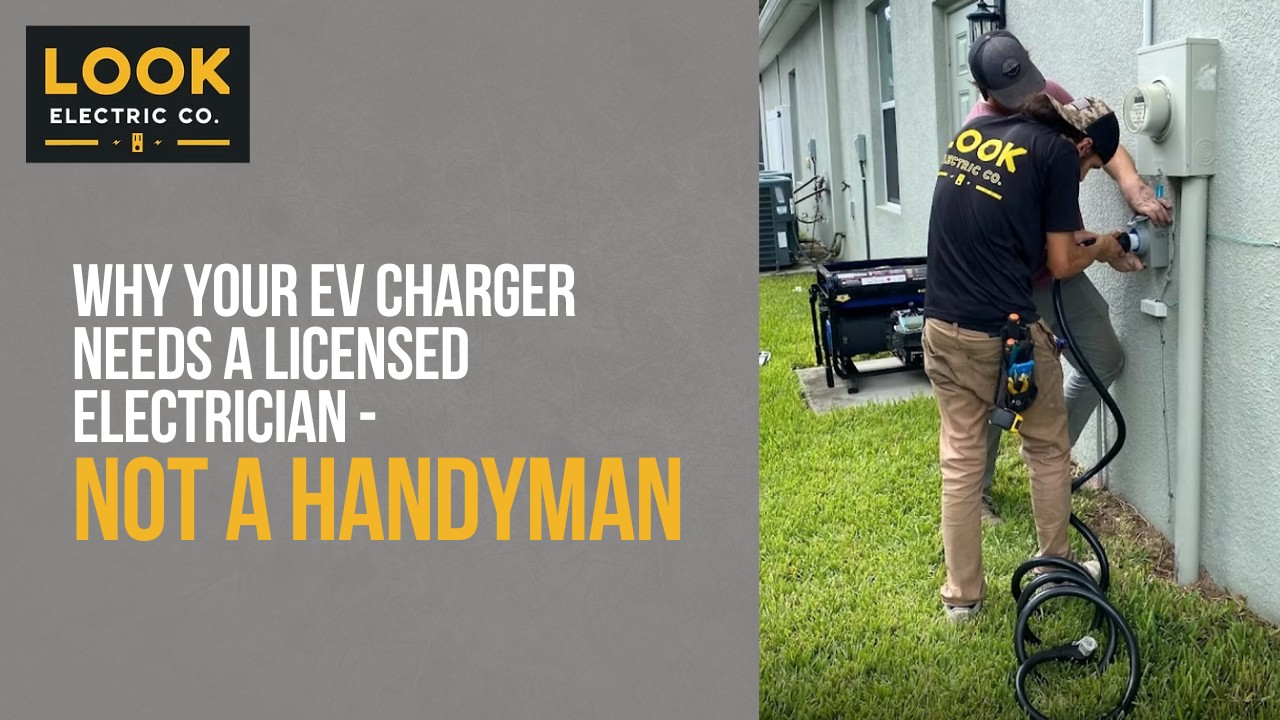
Why EV Chargers Require a Licensed Electrician – Not a Handyman
A Level 2 EV charger draws far more power than a standard household circuit. These systems require a dedicated 240V line, proper grounding, correct amperage calculations, and compliance with Florida’s version of the National Electrical Code (NEC).
Handymen are not trained or licensed to:
- Calculate electrical load for EV charging
- Run dedicated 240V circuits
- Upgrade panels for high-demand chargers
- Install GFCI-protected breaker systems
- Ensure grounding meets NEC Article 250
- Size conductors per NEC Article 625
- Pull electrical permits
Florida law requires a licensed electrical contractor for any work involving service equipment, circuits, or permanent wiring. EV chargers fall squarely into this category.
The Safety Risks of Handyman EV Charger Installation
Installing an EV charger incorrectly can lead to major safety problems-many of which aren’t immediately visible.
Common dangers include:
- 🔥 Overheating and electrical fires
- ⚡ Arc faults inside the wall
- 💥 Breaker overloads
- ⚠️ Loose connections causing melted wiring
- 🔌 Incorrect GFCI protection leading to shocks
Why these risks are higher in Florida
Florida’s humidity accelerates corrosion in wiring, panels, and conduit. A handyman who doesn’t understand moisture-rated equipment or grounding requirements can put your home at serious risk.
Lakeland homes also experience frequent lightning strikes-making proper surge protection and grounding essential.
Code Compliance – The #1 Reason You Need a Licensed Electrician
EV chargers are regulated by NEC Article 625 and enforced by Florida Building Code. A licensed electrician ensures:
Your installation includes:
- Correct wire gauge (often 6 AWG copper)
- A dedicated 40–60 amp breaker
- Properly sized branch circuit
- GFCI protection as required
- Weather-rated equipment for garages or outdoors
- Correct mounting height and clearances
- Grounding per NEC 250
- Surge protection (especially in Lakeland)
Handymen cannot:
- Pull permits
- Pass electrical inspections
- Certify work for insurance
- Sign off on breaker or panel modifications
Insurance Warning
Many homeowners don’t know this:
If a non-licensed person installs your EV charger, your insurance company may deny fire or equipment claims.
When EV Charger Installation Requires a Panel Upgrade
A panel upgrade is often required before installing a Level 2 charger, especially in homes older than 1990.
Your home may need an upgrade if:
- Your panel is 100 amps or smaller
- The panel is outdated (Challenger, FPE, Zinsco)
- Breakers are already fully loaded
- You just added a new HVAC system
- You plan to install solar
EV chargers draw heavy continuous loads
For example:
- Tesla Wall Connector (48A continuous)
- ChargePoint Home Flex (up to 50A)
- JuiceBox (up to 40A)
A licensed electrician can calculate the total load using NEC Article 220. A handyman cannot legally or safely perform this evaluation.
Understanding the Electrical Load Requirements of Level 2 Chargers
Why load calculations matter
EV chargers run at continuous load for hours. NEC requires continuous loads to be calculated at 125% of the rating.
Example:
A 40A charger = 50A calculated load.
If a handyman simply “adds a breaker,” they may unknowingly overload your home’s electrical system.
Conductor sizing requires expertise
Wire that’s too small can overheat and melt-one of the leading causes of electrical fires.
Licensed electricians know how to calculate:
- Voltage drop
- Correct conductor ampacity
- Conductor temperature ratings
- Proper conduit fill
Handymen guess. Electricians measure, test, and certify.
Why Florida Homes Have Unique EV Charger Installation Challenges
Florida’s climate creates additional risks, making licensed installation even more important.
1. Humidity and Corrosion
Poorly sealed connections corrode quickly.
2. Lightning & Surges
Lakeland sits in one of the most lightning-prone regions in the U.S.
EV chargers are sensitive electronic equipment – surge protection is essential.
3. Garage Heat
High temperatures can degrade improperly installed wiring over time.
H3: 4. Outdoor Installations Require Proper Rating
Handymen often install indoor-rated equipment outdoors, which fails quickly in Florida weather.
People Also Ask – Quick Answers for Homeowners
“Can I install an EV charger myself?”
Not legally in Florida. You must be licensed to modify electrical systems.
“Can any electrician install a Tesla or EV charger?”
Only state-licensed electricians trained in EV infrastructure should install these chargers.
“Do Level 2 chargers increase my electric bill?”
Yes, but typically less than the cost of gasoline. Correct installation prevents unnecessary energy waste.
“Do EV chargers require maintenance?”
Licensed electricians recommend occasional inspections to check connections and ensure safe operation.
Conclusion: Why Your EV Charger Installation Needs a Licensed Electrician in Lakeland
As electric vehicles become more popular, safely installing a Level 2 charger has never been more important. Hiring a handyman may seem affordable, but the risks-fires, failed inspections, overloaded panels, code violations, and voided warranties-make it a dangerous choice.
To protect your home, your family, and your EV investment, trust a licensed EV charger electrician in Lakeland who understands Florida electrical code, can pull permits, upgrade your panel, provide surge protection, and install your charger safely and correctly the first time.
Call Look Electric Co. at (863) 859-2515
Schedule your free EV charger installation estimate today and let our licensed professionals handle everything-from load calculations to final inspection.